How to Silence
Fake Hunger
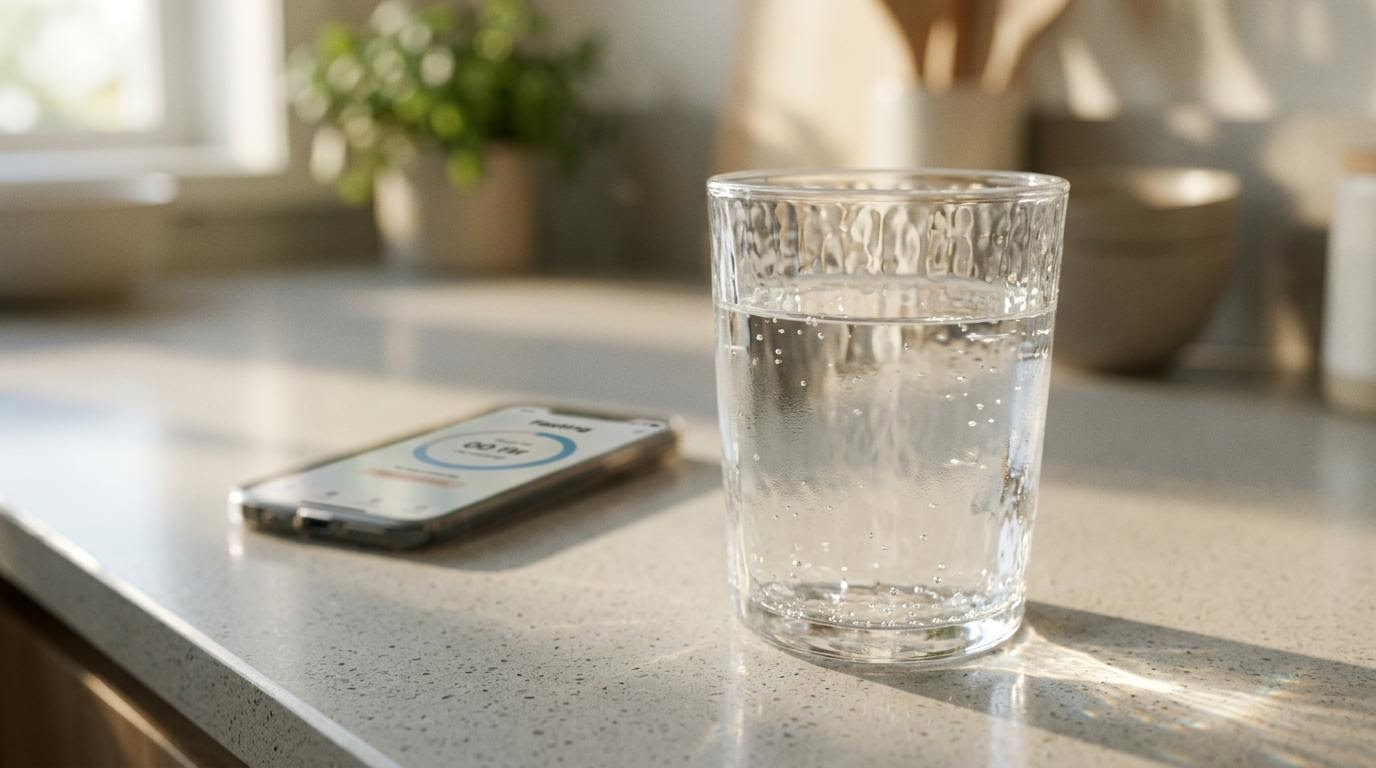
Why Hydration During Fasting is an Absolute 'Must' 💧
When you start fasting, your body's external energy supply is cut off, and it begins to use stored energy. During this process, many people focus solely on restricting 'food' and often miss the most important element: 'hydration'.
Let's explore the scientific reasons why drinking water is so crucial for maximizing the benefits of fasting and reducing side effects.
1. The Most Powerful Weapon to Silence 'Fake Hunger' 🛡️
While fasting, you might experience unbearable hunger. But did you know that our brains sometimes mistake 'thirst (dehydration)' for 'hunger'? This happens because the neural centers for sensing thirst and hunger are located very close to each other in the hypothalamus.
The hypothalamus is a tiny region of the brain that acts as our body's 'thermostat' and 'control tower'.
Adequate hydration not only provides physical fullness by filling the stomach but also turns off the 'fake appetite' switch sent by the brain when it mistakes thirst for hunger.
2. The Core Fuel for Fat Burning and Metabolism Boost 🔥
One of the main goals of fasting is 'fat burning'. The process of breaking down fat to use as energy is called Lipolysis, and all these chemical reactions require 'water'.
Even a 1~2% drop in body water can drastically slow down your metabolic rate. In short, without drinking enough water, your body won't burn fat effectively, even if you fast. Sufficient hydration keeps your metabolism running smoothly, maximizing the weight loss effects of fasting.

3. Flushing Out Toxins and True 'Detox' 🧹
During fasting, the process of Autophagy is activated, breaking down damaged cells and bodily waste. These broken-down toxins and waste materials must be flushed out of the body through urine or sweat to achieve true 'detoxification'.
Here, water acts as the transport truck for waste. If water is lacking, toxins cannot leave the body and remain trapped, which can cause 'fasting side effects' like headaches, fatigue, and skin breakouts.

4. Preventing Electrolyte Imbalance and Dehydration ⚖️
About 20% of the water we consume comes from food. Since water supply from food drops to zero during fasting, you need to consciously drink more water than usual. Moreover, in the early stages of fasting, insulin levels drop, causing the kidneys to excrete large amounts of water and sodium. Consuming adequate water along with a little salt (like sea salt) can effectively prevent the dizziness and lethargy commonly experienced during fasting.
💡 Summary: How to Hydrate During a Fast!

- How much? We recommend at least 2 liters a day, about 500ml more than your usual intake.
- How? Rather than chugging it all at once, sipping a glass frequently every hour ensures better absorption.
- What? Pure water with no additives is best. Since coffee or tea act as diuretics, make sure to drink an equivalent extra amount of plain water. Adding a pinch of salt to your water for mineral replenishment is also a great tip.
Hydration must go hand-in-hand with fasting. Start a healthier fast today with a glass of water!

InterFasting - Intermittent Fasting Tracker & Timer
Get more contents about fasting in Our App
All you want for Diet
Fasting Timer, Fasting Tracker, Body Tracker